Why Hospitality Teams Waste Hours on Decks Nobody Reads (And What Actually Fixes It)
There's a specific kind of time-wasting that hospitality teams are collectively brilliant at: spending two hours on a PowerPoint deck that nobody asked to look at for more than thirty seconds. This is exactly the kind of task an AI presentation tool is built to take off your plate, and most hospitality businesses haven't tried one yet.
Sales proposals. Event briefs. Internal strategy decks. Pre-opening plans. They all need to exist, they all take too long to produce, and most of them look like they were made by someone who learned PowerPoint in 2009 and never quite recovered.
This is fixable.
The Real Problem With Presentation Prep in Hospitality
The issue isn't that hospitality teams lack creativity. It's that presentation design has never been anyone's actual job, and yet it keeps landing on someone's desk anyway.
A sales manager putting together a wedding proposal should be spending their time on the commercial conversation, not wrestling with slide alignment. An ops lead building a department update should be focused on the insight, not the template. The time cost is real, the output's often mediocre anyway, and it happens on repeat, across every team, every week.
This is the kind of invisible operational drag that never makes it onto an efficiency audit, because it doesn't look like a problem. It just looks like work.
Why It Keeps Happening
Presentation quality varies wildly across hospitality teams because nobody who makes them was actually hired to be a designer. Most hospitality businesses don't have one on staff. The people creating presentations do it with whatever came installed on their laptop, using templates last updated three rebrands ago.
The result is a patchwork of inconsistent decks, varying in quality depending on who made them and how much time they had. There's no system for it either. Presentations get built from scratch each time, even when 80% of the content is identical to last month's version, and the same six slides get rebuilt by hand every single Monday.

Presentations Are a Repeatable Output, Not a Creative Task
Here's the shift worth making: most business presentations aren't creative work. They're structured communication with a visual wrapper, which makes them exactly the kind of task AI is well suited to accelerate.
The question isn't "how do we make better slides?" It's "how do we produce clear, professional presentations in a fraction of the time, without needing a designer?"
There's a version of this that stings a bit if you're the person everyone quietly routes their slides to because you're "good at PowerPoint." That informal system disappears. It was never actually your job, and the hours it frees up are worth more spent on the commercial conversation than on font consistency.
What an AI Presentation Tool Actually Does
Gamma is an AI-powered presentation tool that generates structured, well-designed decks from a prompt or a document. You describe what you need, it drafts the structure, populates the slides and applies a clean visual design, and you edit from there. What takes two hours in PowerPoint often takes under twenty minutes.
There's a free tier, worth starting with. It's enough to build a real presentation and decide whether it belongs in your workflow before spending anything, and for most teams the answer's obvious within the first use.
It's not just about speed either. The outputs look professional by default, which matters when you're pitching a corporate client, presenting to ownership, or putting together an event proposal that needs to reflect the quality of your venue.
What This Looks Like in Practice
Wedding and events sales. Build a proposal deck from your standard package information in minutes, personalise the key details, export it, send it. The proposal used to take longer to build than the meeting that won it.
Pre-opening and department planning. Operational decks, onboarding presentations and phase plans all follow a logical structure, and Gamma handles that structure automatically. Nobody's starting the fifth site's onboarding deck from a blank page.
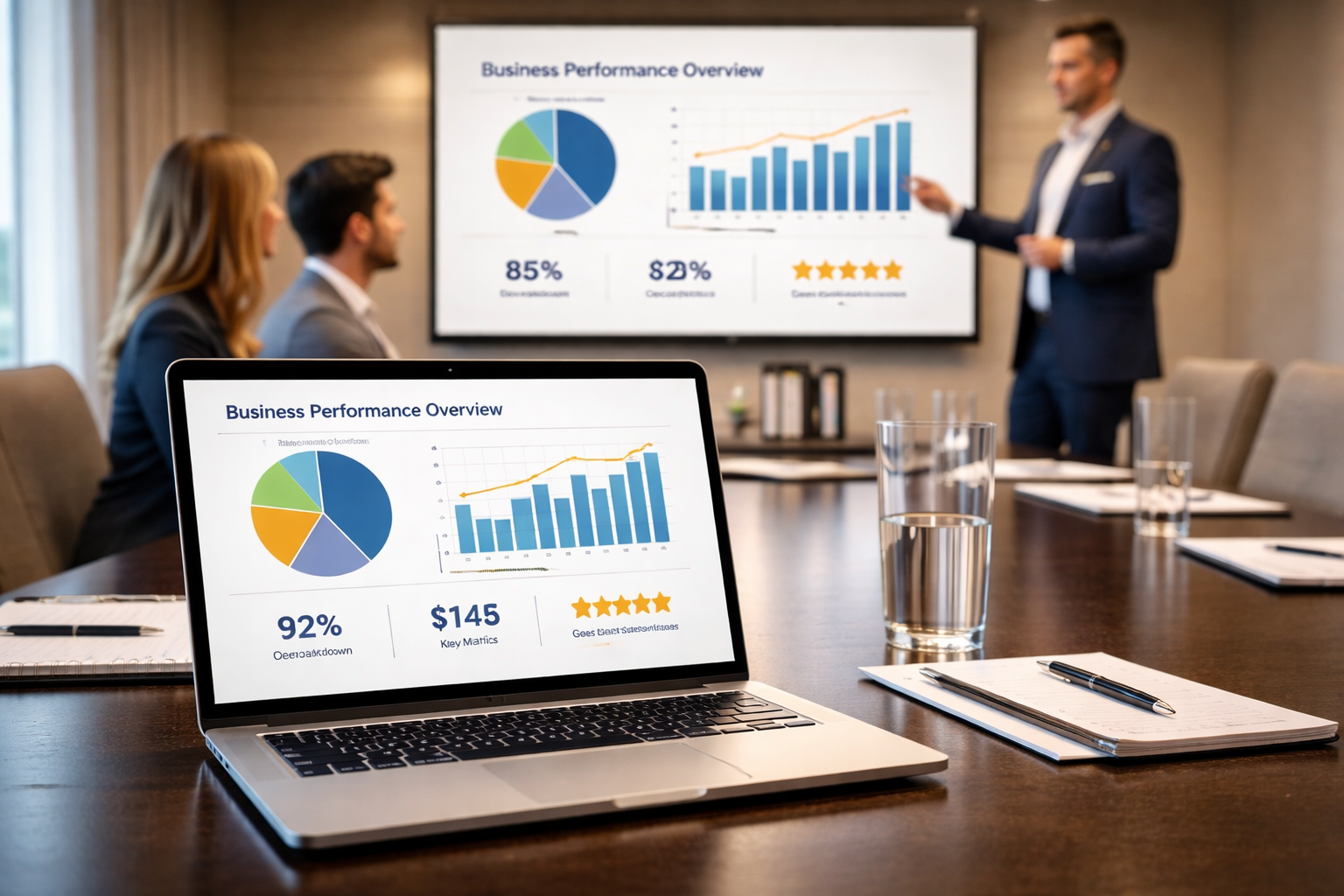
Revenue and performance reviews. Feed in your key numbers and narrative, get a clean presentation back. Useful for GMs reporting to ownership groups or operators presenting to investors. The hour spent formatting slides before the ownership call goes back into the numbers themselves.
Training and SOPs. Turn written procedures into visual presentations your team will actually engage with, particularly useful for onboarding in high-turnover environments. A written SOP nobody reads becomes a deck people actually sit through.
Agency and consultancy pitches. If you're an operator pitching for a management contract, or a supplier presenting to a hotel group, first impressions matter. Credibility stops depending on whoever on the team is fastest with a template.
Key Takeaways
Presentation production is an underestimated time drain across hospitality teams
AI tools like Gamma remove the design barrier without sacrificing quality
The free tier means you can test it properly before committing to anything
Consistently professional output matters commercially, not just aesthetically
It's particularly useful for sales proposals, operational decks and performance reviews
The time saved is real and recurring, not a one-off efficiency gain
Where This Fits
I look at the full picture of where time is lost across a hospitality business and where AI can actually recover it. Presentation tools are one part of that. Systems integration, enquiry handling, reporting automation and training are the rest.
If your team's losing hours to tasks that should be faster, more consistent, or simply off someone's plate, it's worth a proper look. Try Gamma for the presentation problem specifically. If you're curious where the other gaps are, the AI Readiness Case Study is a good next read, or book a 15-minute intro call and I'll walk through it with you directly.